Hey, there! Log in / Register




health care
By adamg - 10/28/22 - 12:35 pm
City Councilor Brian Worrell reports the Walgreens at 90 River St. in Mattapan is closing its doors. Read more.
By adamg - 4/1/22 - 9:06 pm
Tufts Medical Center President Michael Tarnoff announced today that, with the imminent closing of the hospital's in-patient services for children, it will stop intensive treatment of young cancer patients July 1, because many of the patients require overnight stays that the hospital will no longer have for them. Read more.
By adamg - 3/26/22 - 11:48 am
Priyanka Dayal McCluskey, who had been covering the health-care industry for the Globe, is taking the Green Line out to Commonwealth Avenue to join WBUR.
By adamg - 9/10/21 - 10:54 am
Acting Mayor Kim Janey said today the city will spend $2 million renovating space in the Muni on River Street in Hyde Park's Logan Square to serve as a new health center for a neighborhood that has a lower life expectancy than the city average. Read more.
By adamg - 6/16/21 - 2:46 pm
Tufts Health Plan and Harvard Pilgrim Health Care announced today that after their merger this fall, they will have a new corporate name: Point32Health. Read more.
By adamg - 10/27/20 - 11:00 am
The state's highest court today rejected an injured worker's request that the company that paid him worker's comp pay for his purchases of the medical marijuana that eased his pain following complications from surgery for a work-related injury. Read more.
By adamg - 3/27/20 - 12:11 pm
WBUR interviews Dr. Molly Hayes, a pulmonologist and director of the medical ICU at Beth Israel Deaconess Medical Center:
The reports from other countries were that this was happening mostly to older people who had illnesses to begin with. But we are seeing in Boston that this is happening to younger people who don't really have any predisposing illnesses like cardiac disease or cancers.
By adamg - 11/24/19 - 1:27 pm

Today's Globe has a full-page ad that promotes all the wonderful care patients can get at a newly rebuilt hospital - in Palo Alto, CA. Read more.
By adamg - 8/26/19 - 3:25 pm
WBUR reports at least 20 children now receiving care at Boston hospitals for, among other things, cancer, cystic fibrosis, HIV, cerebral palsy, muscular dystrophy and epilepsy have been given about a month to get out of the US because the government no longer cares to let their kind stay in the US, no matter how sick they are.
By adamg - 8/14/19 - 8:26 pm
NBC Boston reports Tufts Health Plan and Harvard Pilgrim Health Care are looking to become a single insurer. No word on which college name will get dropped from the new entity or if they'll just have a computer generate some nebulous sounding new name.
By adamg - 5/21/19 - 4:27 pm
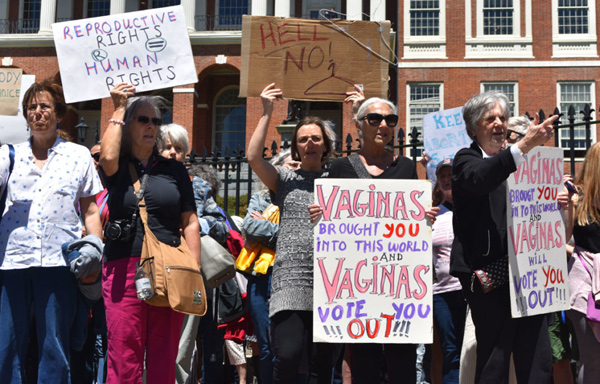
Greg Cook attended a rally and protest at the State House over abortion bans being enacted in several states.
By adamg - 10/2/18 - 4:12 pm
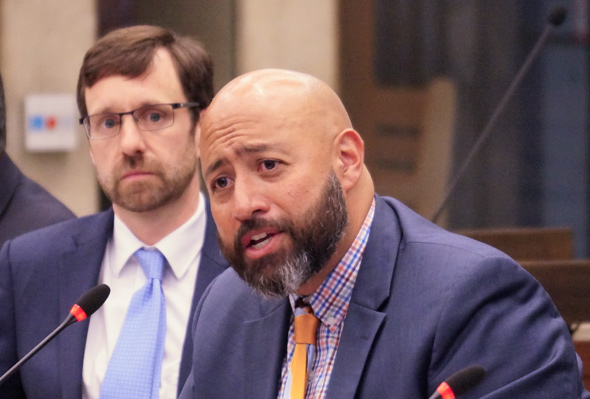
Martinez answers Flaherty as Streets and Transportation Chief Chris Osgood listens.
Boston officials say they plan to go to court - and to state environmental officials - to try to overturn a decision by the Quincy Conservation Commission to reject plans for construction of a new bridge to Long Island, where Boston wants to build a new addiction treatment campus. Read more.
By adamg - 9/24/18 - 11:00 am
WGBH tries to answer questions about the referendum question that would mandate certain nurse/patients ratios in hospitals.
By adamg - 9/21/18 - 8:45 am
The Herald reports Mass. General, Brigham and Women’s and Boston Medical Center agreed to share a total of $1 million in fines for violating patient privacy during the filming of ABC's "Save My Life: Boston Trauma” in 2014 and 2015 - although the hospitals say they didn't violate patient privacy.
By adamg - 8/17/18 - 10:30 am
WBUR reports on Children's Hospital's new transgender surgery center - which only takes patients over 18 - and interviews its first surgical patient.
By adamg - 6/17/18 - 11:06 pm
The Boston Business Journal reports Mayor Walsh had something to do with the health center's decision to rescind layoffs announced Thursday, although it was not clear exactly what.
By adamg - 4/2/18 - 6:29 pm
A federal judge today dismissed a lawsuit by an anesthesiologist who sued Mass. General over double-booked surgeries - but gave her 45 days to come up with detailed proof the government was billed for operations senior surgeons did not actually participate in and so re-open the suit. Read more.
By adamg - 12/13/17 - 8:29 am
The State House News Service reports the individual mandate - basically a requirement for people to get or buy health insurance - will remain in Massachusetts thanks to the 2006 Romneycare law.
By adamg - 12/10/17 - 4:19 pm
UPDATE: Boswell has resigned or been fired.
It's not just that a Fenway employee has been accused of multiple instances of sexual assault and bullying, but that CEO Stephen Boswell covered it up and when the board of directors found out, they participated it in the coverup, Bay Windows writes.
- Page 1
- ››

Support Universal Hub
Help keep Universal Hub going. If you like what we're up to and want to help out, please consider a (completely non-deductible) contribution.
